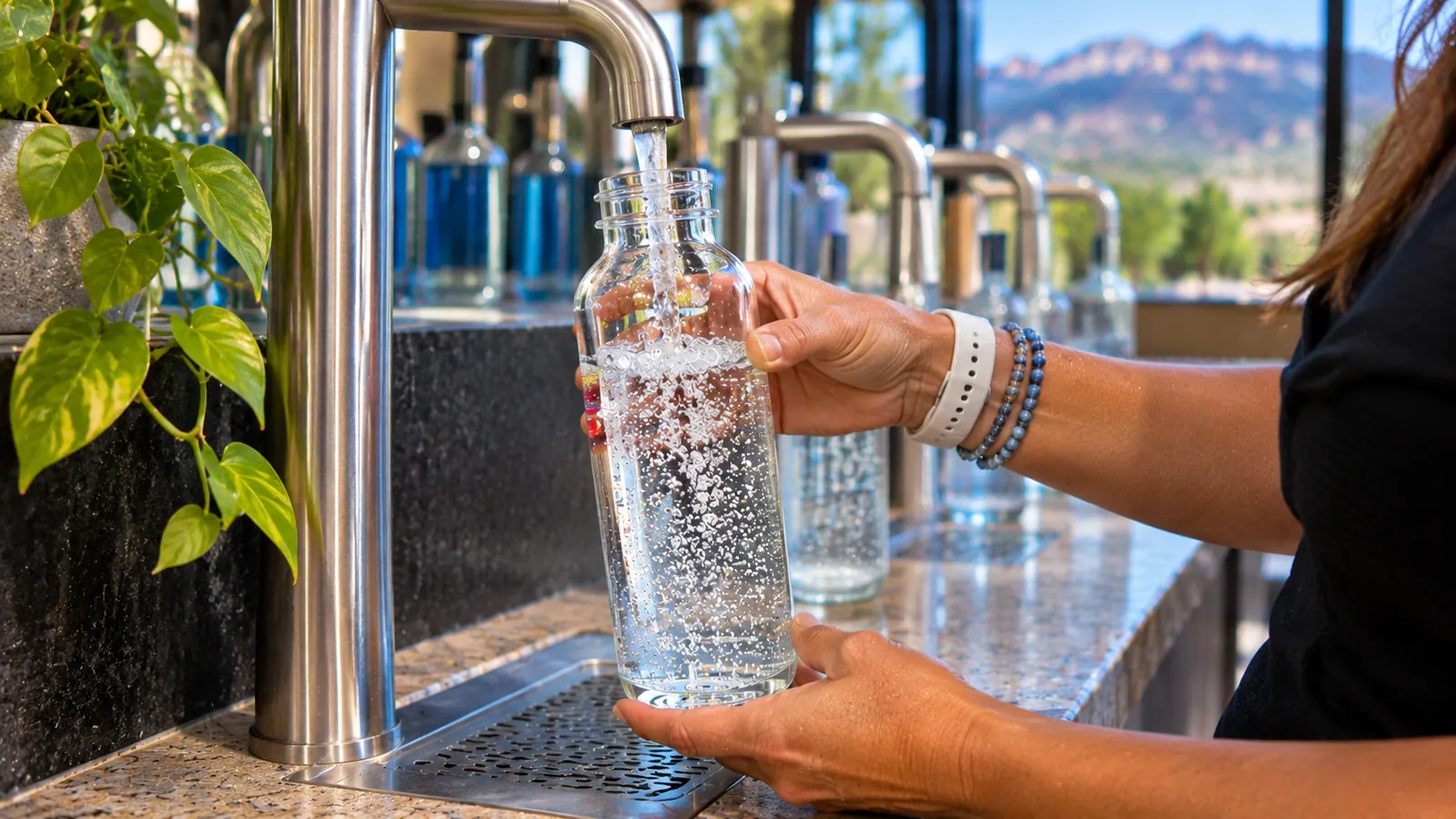
How they work
A rechargeable base holds a small electrolysis cell. Press the button and, a few minutes later, hydrogen bubbles rise into the water.
What to look for
- SPE/PEM membrane technology — separates the hydrogen from byproducts like oxygen, ozone and chlorine so they don't end up in your water
- A vent for byproduct gas on the base
- Independent ppm test results, not just a big number on the box
- Glass or quality food-grade container
- Clear warranty and replaceable parts
Red flags
- Claims that it cures or treats diseases
- "ORP" numbers presented as proof of hydrogen
- A chlorine or "pool" smell after running a cycle
- Extremely cheap bottles with no membrane information
Test your bottle
Reagent drops tell you what your bottle actually makes. See ppm and testing.
Before you buy, taste fresh hydrogen water at a water bar so you know what you're comparing against.
Try fresh hydrogen alkaline water in Albuquerque. Your first visit is free. Call (505) 498-4098 to claim it.
Common questions
Do hydrogen water bottles really work?
Good ones do produce hydrogen. Cheap ones may produce little, or let byproducts into the water.
How long should a bottle cycle run?
Follow the maker's instructions. Many run 3–10 minutes. Drink right after.