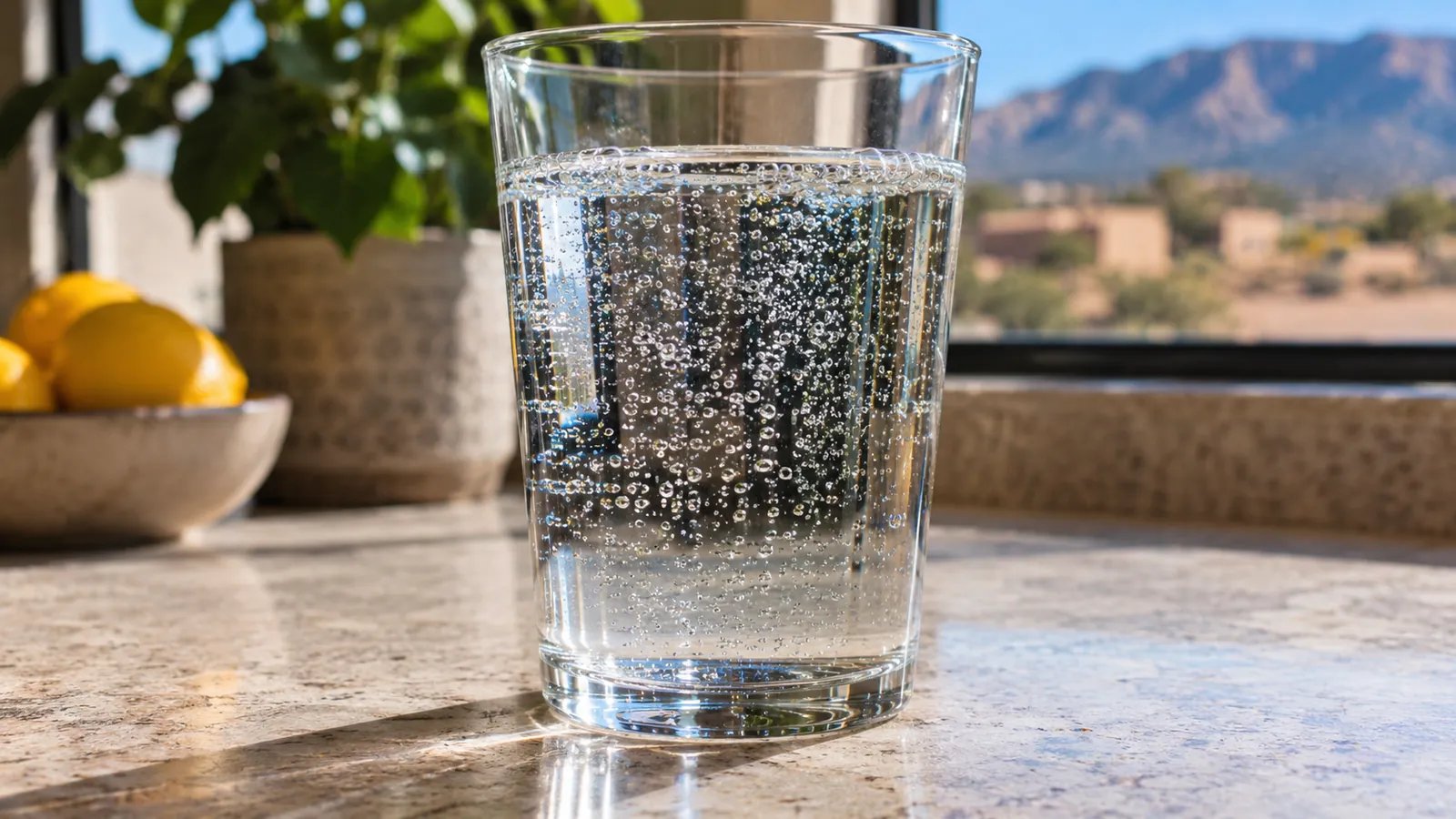
The short version
- Regular water is H₂O. Its hydrogen atoms are bound to oxygen and aren't available as a gas.
- Hydrogen water has extra molecular hydrogen gas, H₂, dissolved in it.
- H₂ has no taste, color or smell. Hydrogen water tastes like water.
- The gas escapes quickly once the water is exposed to air, so fresh matters.
How much hydrogen is in it?
Hydrogen in water is measured in parts per million (ppm). At sea level and room temperature, water can hold about 1.6 ppm of hydrogen before it's "full." Most hydrogen water people drink falls somewhere between about 0.5 and 1.6 ppm, depending on how it's made and how fresh it is. See ppm and testing.
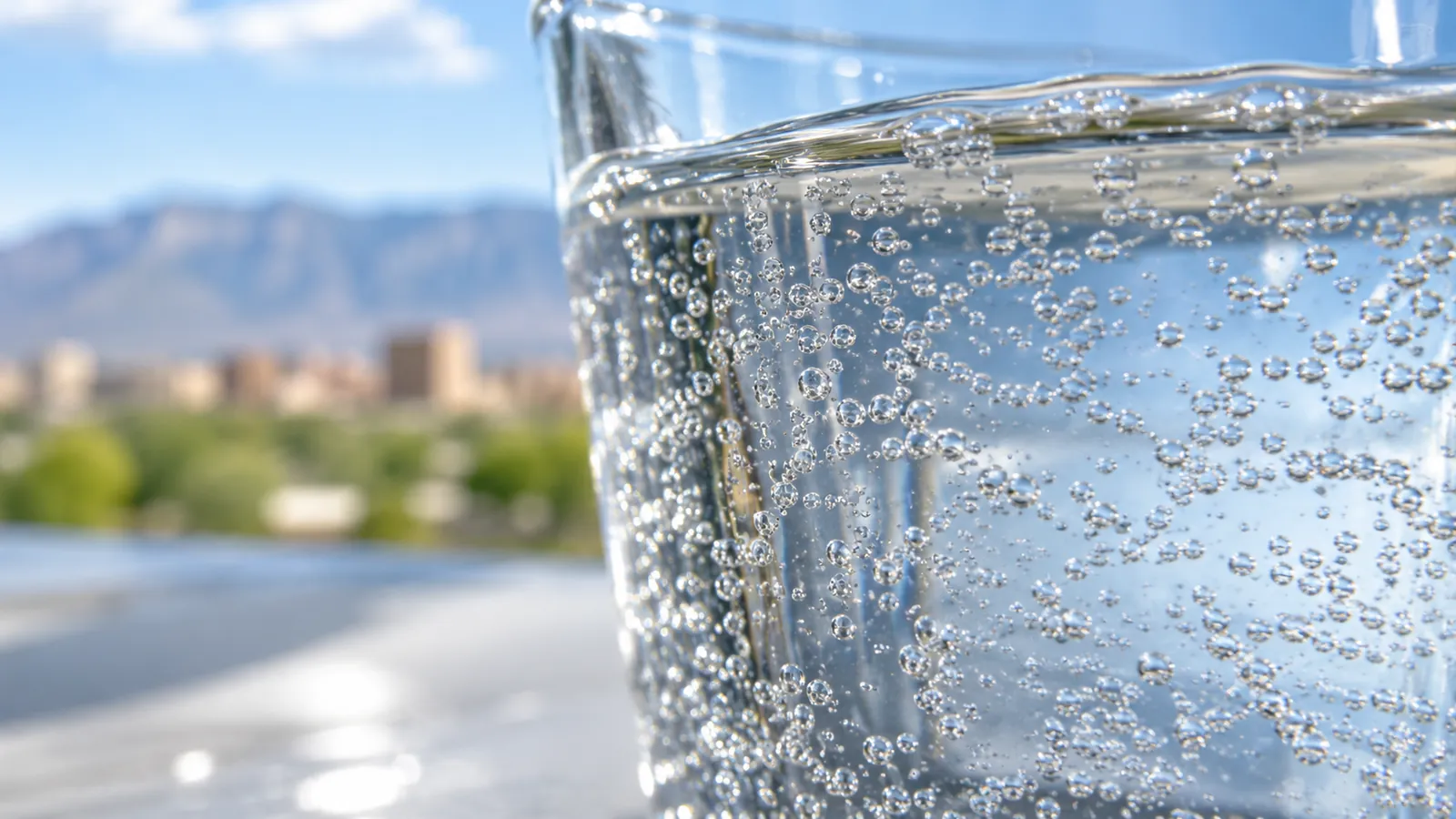
How it's made
- Water ionizers and generators split water with electricity and dissolve the hydrogen right away
- Tablets of magnesium react with water and release hydrogen bubbles
- Portable bottles have a small electrolysis cell in the base
- Cans and pouches are sealed after hydrogen is infused at a factory
More in how hydrogen water is made.
Why people drink it
Molecular hydrogen became a research topic after a widely cited 2007 study in Nature Medicine suggested it could act as a selective antioxidant in animals. Since then, there have been many small human studies on exercise, metabolism, mood and more, with mixed results. We cover them honestly in what the research says.
Try fresh hydrogen alkaline water in Albuquerque. Your first visit is free. Call (505) 498-4098 to claim it.
Common questions
Is hydrogen water the same as alkaline water?
No. Alkaline water has a higher pH. Hydrogen water has dissolved H₂ gas. Some machines make water that is both. See hydrogen vs. alkaline water.
Is hydrogen water flammable or dangerous?
No. The amount of hydrogen dissolved in drinking water is tiny and is not a fire risk.
Does hydrogen water taste different?
No. It tastes like the water it's made from. Some people find it a little smoother.