What ppm means
Parts per million (ppm) is the same as milligrams of hydrogen per liter of water. One ppm means 1 mg of H₂ in a liter.
| Level | What it means |
|---|---|
| Under 0.3 ppm | Low |
| 0.5–1.0 ppm | Moderate; common for fresh electrolysis water |
| About 1.6 ppm | Saturated at sea level and room temperature |
| Above 1.6 ppm | Possible briefly in sealed, pressurized containers |
Many of the human studies used water in roughly the 0.8–1.6 ppm range. There's no proven "right" level.
A note on altitude
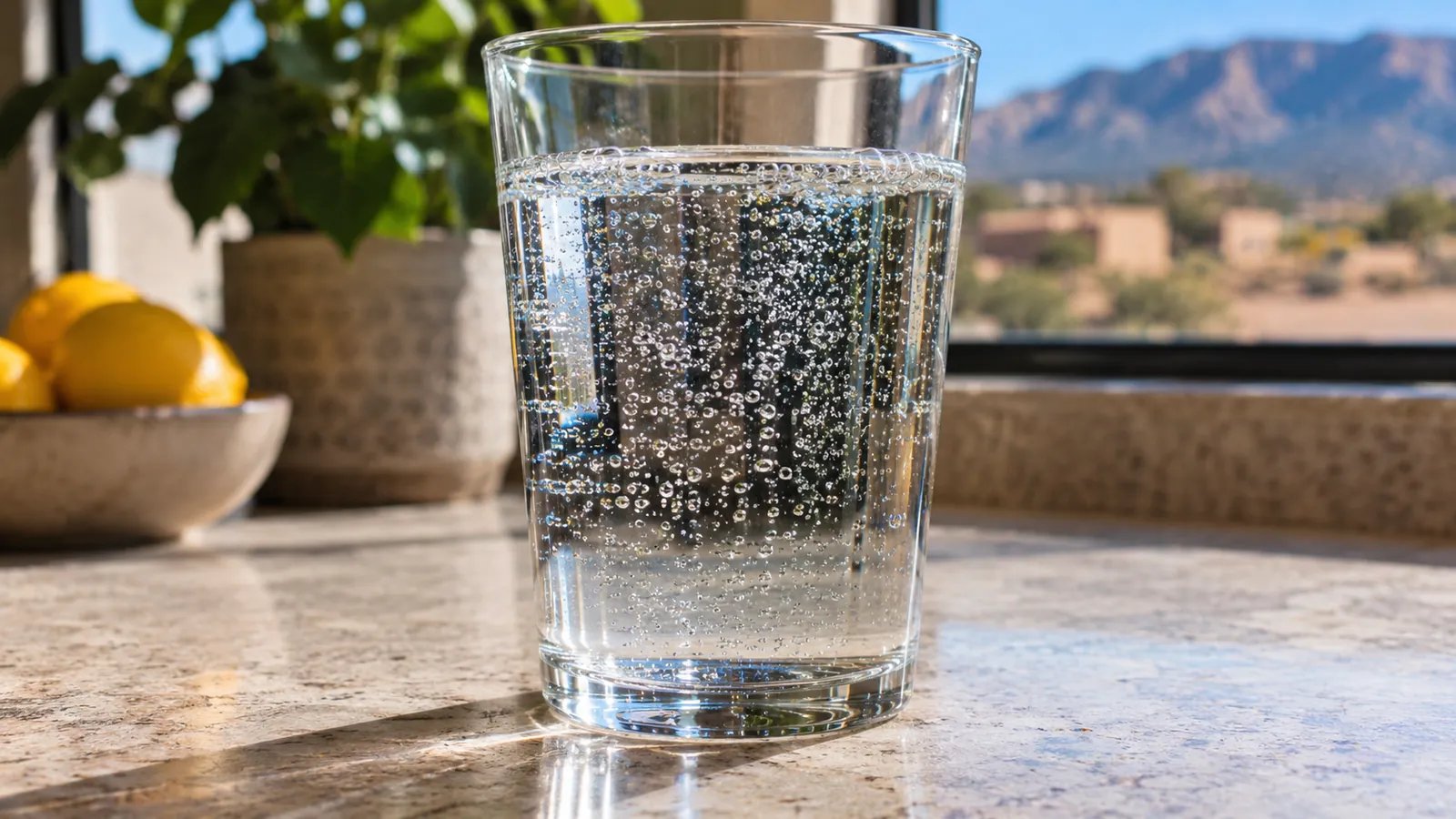
Gases dissolve less at lower air pressure. At Albuquerque's elevation of about 5,000 feet, open water holds a bit less hydrogen at saturation than it would at sea level, and hydrogen escapes a little faster. One more reason to drink it fresh.
How to test
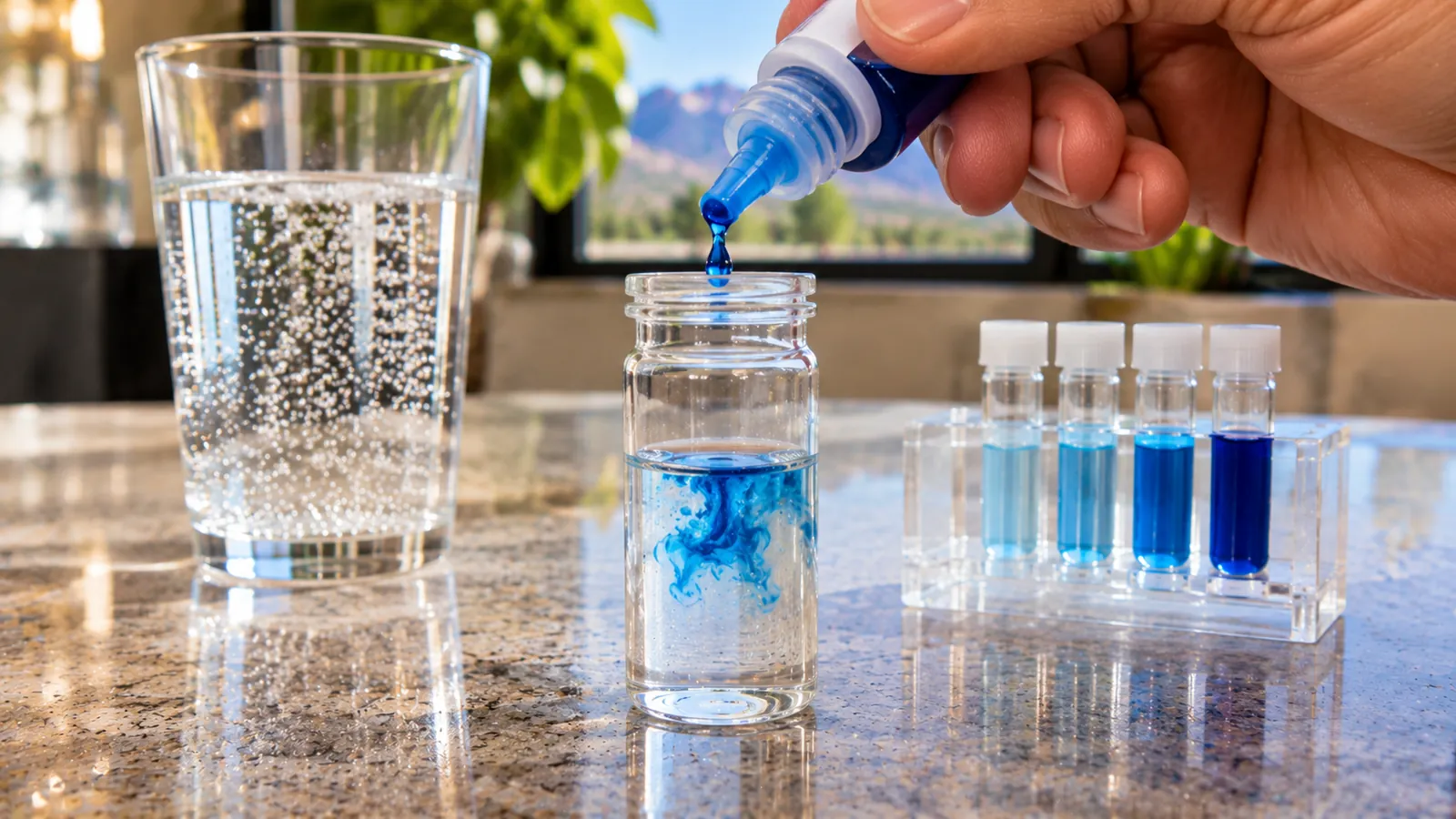
- Reagent drops (like H2Blue) — add drops one at a time to a measured sample until the blue color stops disappearing. Each drop equals a set amount of hydrogen. Inexpensive and fairly reliable.
- Dissolved hydrogen meters — useful, but quality varies and they need calibration.
- Avoid ORP meters as a hydrogen test — ORP (oxidation-reduction potential) is affected by pH and other factors, so a negative ORP number doesn't tell you how much hydrogen is in the water.
Try fresh hydrogen alkaline water in Albuquerque. Your first visit is free. Call (505) 498-4098 to claim it.
Common questions
Is higher ppm always better?
Not proven. Studies used a range of levels, and no clinically validated target exists.
Does Hydrobar test its water?
Ask at the bar or call (505) 498-4098 — you can see the water tested in person.